
Prof. Dr. med. Dr. h. c. mult. Madjid Samii
President and Founder of the INI – International Neuroscience Institute®

Delve into our past to understand the milestones that marked our development, the challenges overcome, and the pioneering spirit that continues to drive us forward.
The story of the International Neuroscience Institute (INI) Hannover is a testament to visionary thinking, unwavering dedication, and the relentless pursuit of excellence in neuroscience. Its journey, from a forward-looking concept for a World Exposition to a globally recognized center of neurosurgical care and research, is one of remarkable achievement and profound impact.

In the context of planning the World Exposition 2000 in Hannover, an event designed to showcase groundbreaking ideas for the new millennium, Professor Madjid Samii was invited to contribute a concept reflecting his decades of pioneering work in modern neurosurgery.
Drawing from this unparalleled experience, he articulated a pressing need: a new paradigm for clinical neuroscience. Professor Samii envisioned a center where the boundaries between world-class clinical care and transformative scientific innovation would dissolve – a place singularly focused on providing outstanding, patient-centered treatment while simultaneously propelling neuroscience forward through collaborative, interdisciplinary research.
This profound vision crystallized into the concept of the International Neuroscience Institute (INI), a unique institution designed to unite leading clinical and research experts in the neurosciences under one extraordinary roof.


The development of the INI was initially spearheaded by Professor Samii and his dedicated team. The project soon garnered crucial support from the International Neurobionik Foundation, and a positive assessment by the Roland Berger Group paved the way for a state guarantee, providing vital backing for what was, at its heart, a privately financed venture.
Under Professor Samii's leadership, key founding stakeholders of the economic entity INI GmbH joined forces. A pivotal early partner was Siemens Medical Solutions, then helmed by CEO Dr. Reinhardt. Recognizing the unique potential of the initiative, Siemens committed to equipping the institute with the most advanced medical technology available, a promise that would define INI's technological edge. To ensure operational excellence, the Asklepios Group was selected as the hospital management company.
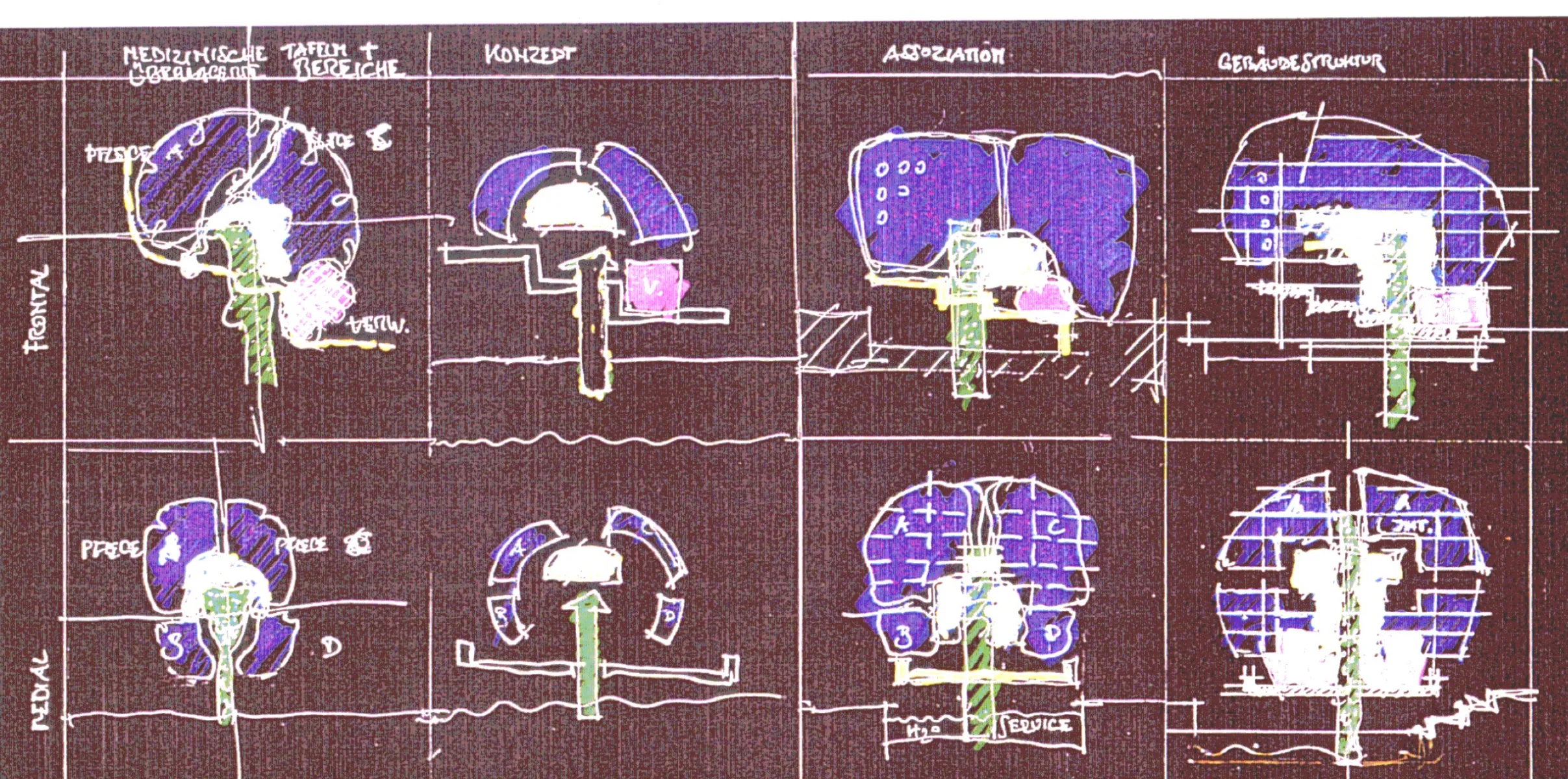
The architectural embodiment of INI's focused mission was entrusted to the SIAT architecture firm. Professor Madjid Samii's inspired design resulted in the now-iconic, brain-shaped building – a powerful visual metaphor for the institute's dedication to the complexities of the human brain.
Constructed by the Holzmann company, this architectural marvel was completed in a record time of just two years, rising in the heart of Hannover’s Medical Park. This strategic location, near the Hannover Medical School and the Fraunhofer Institute, was chosen to foster a rich ecosystem of collaboration, and the Lower Saxony Centre for Biomedical Engineering, Implant Research and Development (NIFE) was recently built right next to INI.
On July 21, 2000, the International Neuroscience Institute was officially inaugurated, standing as a flagship project of the EXPO 2000 World Exposition. The doors opened to the first patients just a few months later, in October 2000, marking the beginning of a new era in neurosurgical care.
From its very opening, INI Hannover distinguished itself with state-of-the-art technology. A major milestone was the installation of the first 3-Tesla MRI scanner for clinical use in Europe, a testament to the strong partnership with Siemens.
Furthermore, the institute featured one of the world's first hybrid operating rooms, equipped with a biplanar angiography system. This, alongside a comprehensive suite of advanced imaging technologies and high-end surgical equipment, firmly established INI Hannover at the global forefront of neurosurgical excellence – a position it has proudly maintained and continually advanced.
President and Founder of the INI – International Neuroscience Institute®
Neurosurgeon Vice President and Deputy Medical Director

Former Chair of Neurology at the University of Düsseldorf and a pioneer in MR-based brain mapping. He joined INI at its inception to establish the Department of Neurology and Functional Brain Mapping, capitalizing on the institute’s then-unique 3-Tesla MRI.
Previously Vice President of the Max Planck Institute of Psychiatry in Munich and Chair of Psychiatry at Hannover Medical School. His renowned expertise in neurobiology was crucial in integrating neuropsychiatric perspectives into INI's holistic care model.
Founding Director of Neuroradiology at INI. Formerly head of the Department of Neuroradiology at Saarland University Hospital in Homburg, he later became the first director of Neuroradiology at INI Hannover, where he established advanced neuroimaging protocols and contributed to the development of intraoperative imaging techniques. His tenure at INI lasted until 2007.
Since 2019, Prof. Heinrich Lanfermann has headed Neuroradiology at INI Hannover alongside his role as Director of Neuroradiology at Hannover Medical School. An internationally recognized expert in neuroradiological MRI, he has shaped the field at both institutions. Since October 2025, he has worked exclusively at INI, where he continues to lead Neuroradiology.
Interventional Neuroradiologist. Based at the University Hospital Zurich, Prof. Valavanis was a pioneer in interventional neuroradiology. His innovative approaches to cerebrovascular interventions have significantly influenced the field, and his collaboration with INI has enhanced the institute’s capabilities in neurovascular treatments.
Neuropathologist and Academic Leader. Former Chair of Neuropathology at Hannover Medical School and Founding President of the Medical University of Graz, Prof. Walter also led the PhD program at INI. His expertise in neuropathological diagnostics was foundational to INI’s academic platform.
ENT Surgeon and Skull Base Pioneer. A leading figure in endoscopic ENT and skull base surgery, Prof. Draf previously chaired ENT at Fulda. After retirement, he led the Department of ENT at INI and co-authored with Prof. Madjid Samii a seminal skull base surgery textbook (1989), cementing their shared legacy in the field.
Pioneer of Radiosurgery (Gamma Knife). Formerly affiliated with the Karolinska Institute and the University of Virginia, Prof. Steiner was one of the early developers of stereotactic radiosurgery. His work at INI brought non-invasive treatment options to complex neurosurgical conditions.
Functional and Endoscopic Neurosurgeon. Previously at the University of Marburg, Prof. Hellwig was among the first to advance neuroendoscopic surgery in Germany. At INI, he contributed significantly to functional neurosurgery and minimally invasive techniques.
Neurosurgeon and Academic Leader. Former Chair of Neurosurgery at Charité – Universitätsmedizin Berlin (Virchow-Klinikum), Prof. Lanksch brought substantial academic and clinical expertise to INI, especially in vascular and spinal neurosurgery.
Pituitary and Intraoperative MRI Expert. A global authority in pituitary and skull base surgery, Prof. Fahlbusch was formerly Chair of Neurosurgery in Erlangen. He joined INI in 2006 and inaugurated INI’s second hybrid operating suite with intraoperative MRI in 2007.
Microsurgical and Brainstem Surgery Expert. Former Chair of Neurosurgery at Marburg and later Zurich, Prof. Bertalanffy is an internationally renowned authority on brainstem cavernomas and complex brainstem microsurgery. At INI, he established a center of excellence in this domain.
From the founding of INI in 2000, Prof. Shizuo Oi, Professor and Head of Pediatric Neurosurgery at Jikei University in Tokyo, played a key role in establishing Pediatric Neurosurgery at INI. As an internationally renowned pediatric neurosurgeon, he helped shape the department’s strong international profile during the Institute’s formative years.
In 2014, Prof. Concezio Di Rocco became Director of Pediatric Neurosurgery at INI Hannover. Previously, he headed Pediatric Neurosurgery and the Neurosurgical Training Program at the Università Cattolica del Sacro Cuore in Rome, bringing decades of international clinical and scientific experience to Hannover.
Spinal Surgeon and Scoliosis Specialist. A globally respected orthopedic surgeon, Prof. Harms is known for revolutionizing complex spine and deformity surgery. His work at INI significantly advanced the care of patients with severe spinal pathologies.
He was a pioneering figure in plastic and reconstructive surgery in Germany and Europe. He was the Director of the Clinic for Plastic, Hand and Reconstructive Surgery at Hannover Medical School (MHH) from 1981 until his retirement in 2000. He was instrumental in establishing many modern techniques, particularly in microsurgery, peripheral nerve surgery, and complex reconstructions. He passed away in October 2022.
Since its founding, INI Hannover has distinguished itself as a global nexus of education and excellence in neurosurgery.
Neurosurgeons, fellows, residents, and medical students from over 80 countries have journeyed to INI, seeking knowledge through short-term observerships, extended fellowships, or comprehensive research programs. This commitment to nurturing expertise at all levels has cemented INI's worldwide reputation.
Professor Madjid Samii’s dedication to global outreach and education is powerfully manifested in several international initiatives:
